
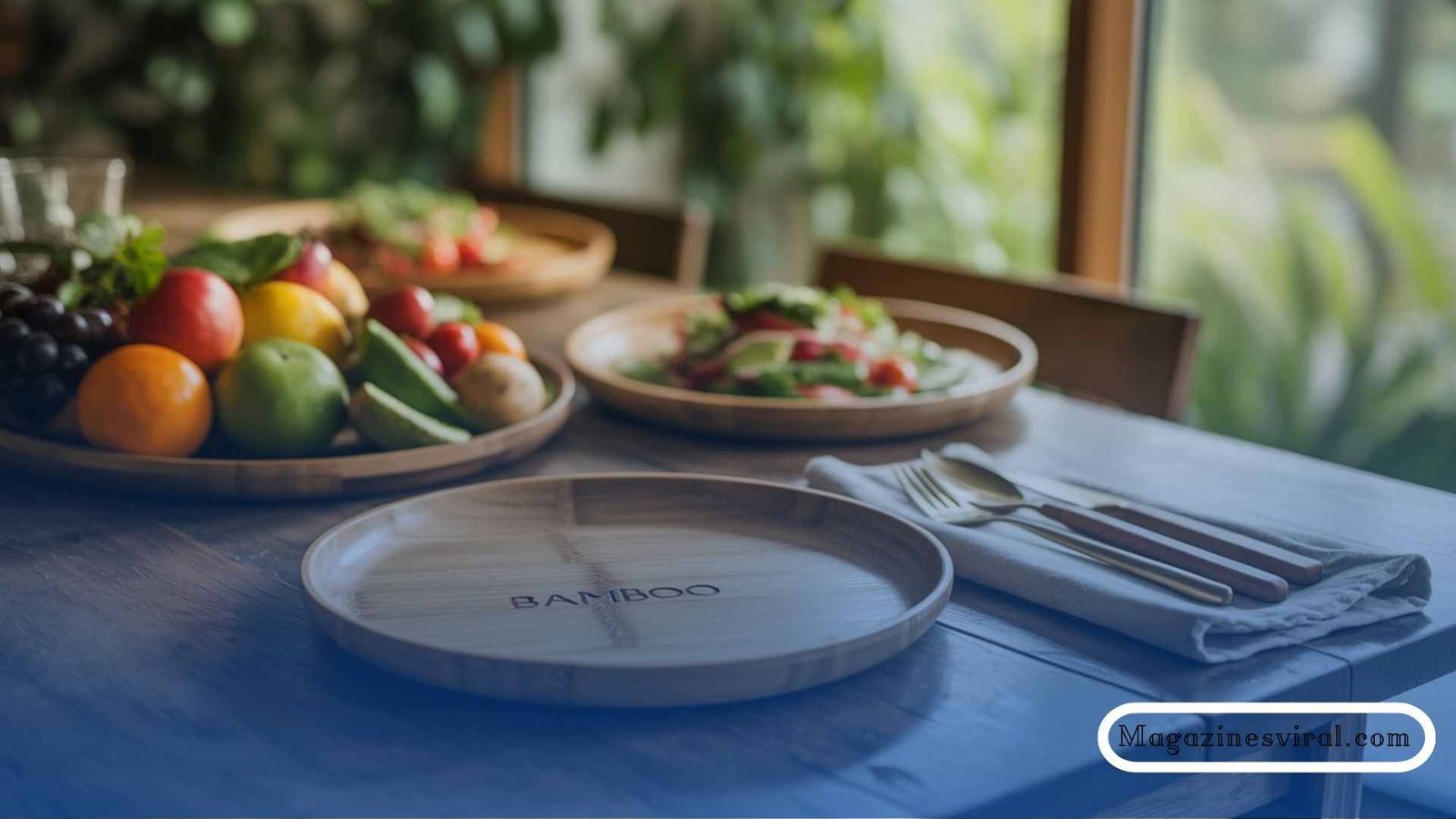
Bamboo plates have become an increasingly popular choice in recent years as more people turn toward sustainable and eco-friendly living. Unlike traditional plastic or ceramic plates, bamboo plates are made from a natural, fast-growing plant that can be harvested without damaging the environment. They provide a balance between practicality and sustainability, making them an excellent choice for homes, restaurants, and outdoor events. Their unique texture and natural appearance also add an elegant touch to any dining experience.
What is a Bamboo Plate?
A bamboo plate is a type of tableware crafted entirely or partially from bamboo. Some are made from solid bamboo that has been cut, shaped, and polished into durable dishes, while others are manufactured using compressed bamboo fibers. They can be reusable or disposable, depending on the production method. Since bamboo is naturally non-toxic and free from harmful chemicals such as BPA, these plates are considered safer compared to synthetic alternatives. Their versatility makes them suitable for serving both hot and cold meals in daily use.
History and Origin of Bamboo Plates
Bamboo has been used in Asian cultures for centuries, not only for construction and household goods but also for food-related purposes. Bamboo leaves and stalks were traditionally used to wrap food, and over time, craftsmen developed methods to shape bamboo into plates and utensils. The modern bamboo plate industry emerged as part of the global movement toward eco-friendly products. Today, bamboo plates are exported worldwide and appreciated for their ability to combine traditional craftsmanship with modern environmental responsibility.
Benefits of Using Bamboo Plates
One of the biggest advantages of bamboo plates is their positive impact on the environment. Unlike plastics that take hundreds of years to decompose, bamboo plates break down naturally without leaving toxic residues. They are also lightweight and durable, making them convenient for daily use or outdoor settings like camping and picnics. Many users also appreciate the natural antibacterial properties of bamboo, which help prevent bacteria growth on the surface of plates. Additionally, bamboo plates are stylish and modern, fitting seamlessly into both casual and formal dining setups.
Types of Bamboo Plates
Bamboo plates come in several different styles, each designed for specific uses. Solid bamboo plates are carved directly from bamboo and are strong, long-lasting, and ideal for repeated use at home. Bamboo fiber plates, on the other hand, are created by grinding bamboo into pulp and compressing it into lightweight yet sturdy dishes that often come in colorful designs. Disposable bamboo plates are made from fallen bamboo leaves and are perfect for parties, weddings, or catering events where convenience and sustainability are equally important. This variety allows consumers to choose according to their lifestyle and preferences.
How Bamboo Plates Are Made
The production process for bamboo plates depends on whether they are solid, fiber-based, or disposable. Solid bamboo plates involve cutting thick sections of bamboo, shaping them, and then polishing them with food-safe oils. Bamboo fiber plates require bamboo stalks to be ground into fine fibers, mixed with natural binders, and then molded into plate shapes. Disposable bamboo plates are usually pressed from fallen bamboo leaves using heat and pressure, without the addition of chemicals or dyes. Each method highlights the resourcefulness of bamboo as a material that can be transformed in multiple sustainable ways.
Uses of Bamboo Plates
Bamboo plates are incredibly versatile and suitable for many settings. At home, they can be used for everyday meals, providing a safe and eco-friendly option for families. Many parents also prefer bamboo plates for children because they are lightweight and less likely to break than ceramic or glass. In the commercial sector, bamboo plates are commonly used in restaurants, cafes, and eco-conscious catering services. For events such as weddings, birthdays, and outdoor picnics, disposable bamboo plates serve as a stylish yet practical alternative to single-use plastics or paper plates that often lose strength with liquids.
Maintenance and Care for Bamboo Plates
To maximize the lifespan of bamboo plates, proper maintenance is essential. Unlike ceramic or glass, bamboo plates should not be placed in dishwashers, as the heat and water pressure can weaken the fibers. Instead, they should be hand-washed with mild soap and lukewarm water. After washing, it is best to dry them immediately to prevent warping or cracking. Applying a thin layer of food-safe oil every few weeks can help preserve their natural finish and prevent drying out. With the right care, reusable bamboo plates can last for years without losing their strength or appearance.
Safety of Bamboo Plates for Food Use
Safety is one of the main reasons people choose bamboo plates over synthetic alternatives. Because they are made from natural materials, bamboo plates are generally free from harmful chemicals such as BPA, phthalates, and other toxins found in plastic. They are safe for serving both hot and cold foods, although it is recommended to avoid microwaving them for long periods, as extreme heat may damage the structure. Parents often prefer bamboo plates for toddlers and young children, as they are safer than fragile ceramic plates and do not release harmful substances into food.
Environmental Impact of Bamboo Plates
Bamboo plates are a symbol of sustainable living because bamboo itself is one of the fastest-growing plants on Earth. It can grow without pesticides or fertilizers and regenerates naturally after being cut. By choosing bamboo plates over plastic ones, people actively reduce landfill waste and contribute to a cleaner environment. Moreover, since bamboo plates are biodegradable and compostable, they return to the soil within months rather than centuries. This eco-friendly lifecycle supports the concept of a circular economy, where products are reused, recycled, and safely returned to nature.
Bamboo Plates vs. Other Tableware
When comparing bamboo plates with other types of tableware, their advantages become clear. Compared to plastic, bamboo plates are safer for health and much better for the environment. Unlike ceramic or glass, they are lightweight and less likely to break, making them more practical for children and outdoor events. Disposable bamboo plates are stronger than paper plates and do not become soggy when serving liquid foods. This combination of strength, safety, and sustainability places bamboo plates ahead of most alternatives in today’s eco-conscious dining culture.
Where to Buy Bamboo Plates
Bamboo plates are widely available in both physical and online stores. Many supermarkets now carry eco-friendly sections that feature bamboo products, while online platforms such as Amazon, Etsy, and specialized eco-friendly shops offer a wide range of designs and prices. Customers can choose between reusable bamboo plate sets for home use or bulk packs of disposable bamboo plates for events. Some stores even allow customization, offering engraved bamboo plates for weddings, gifts, or branding purposes. With increasing demand, they are becoming easier to find in all markets worldwide.
Future of Bamboo Plates in Sustainable Living
The popularity of bamboo plates is expected to grow as awareness of environmental issues continues to spread. Many governments are encouraging the reduction of single-use plastics, which creates more opportunities for bamboo alternatives to enter the mainstream. With advancements in production methods, bamboo plates may become even more affordable and widely available. Their role in promoting sustainable living demonstrates how everyday choices—such as the type of plate we eat from—can have a significant impact on the health of our planet.
Conclusion
Bamboo plates represent much more than just dining ware; they are a conscious step toward living more sustainably. Their natural design, safety, and biodegradability make them a practical replacement for harmful plastic and fragile ceramic options. From daily family meals to large gatherings, bamboo plates provide convenience while protecting the environment. As society moves further toward eco-friendly solutions, bamboo plates are likely to remain a vital part of the journey toward a cleaner, greener future.
Want to read more? Visit my website for new and interesting articles.