
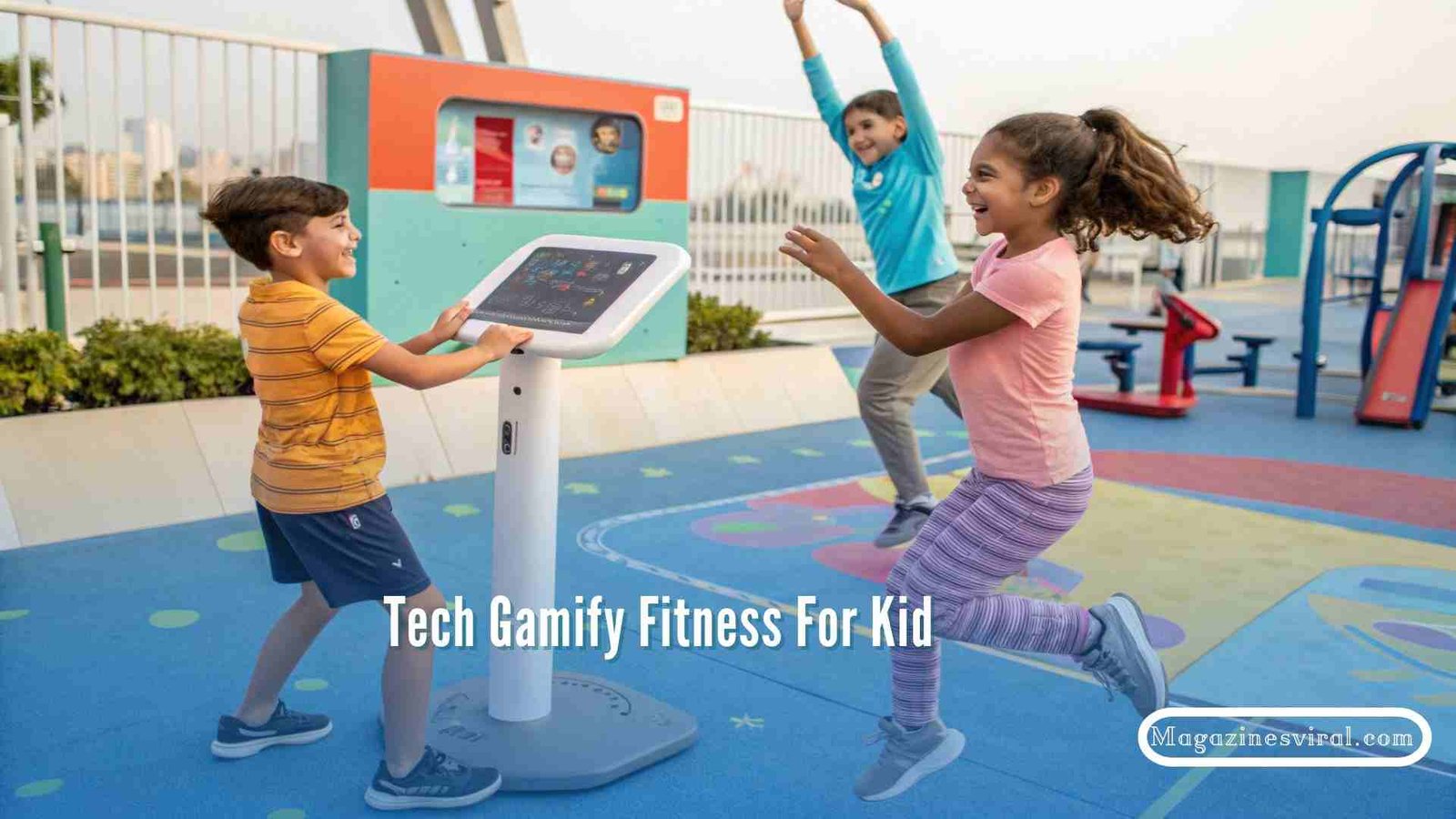
Tech gamify fitness for kid means using fun technology like apps, wearables, or games to make exercise exciting and engaging for children. It helps kids stay active while enjoying playful challenges and rewards.
Stay tuned with us as we dive deeper into the world of Tech Gamify Fitness For Kid—where fun meets fitness and technology inspires healthy habits for your little ones! Exciting updates and tips are coming your way soon!
What Is Gamified Fitness?
Gamified fitness is the process of applying game elements—like points, badges, rewards, and challenges—to exercise routines. The goal is simple: make physical activity more exciting and interactive for children by integrating it into games they love.
This can take many forms, including:
- Fitness video games
- Wearable activity trackers with goals
- Mobile apps that reward movement
- Augmented or virtual reality fitness experiences
- Smart toys that react to physical input
By turning workouts into gameplay, kids get active without realizing it—and that’s the magic.
Why Do Kids Need Gamified Fitness?
The need for creative fitness solutions has never been greater. According to the CDC, only 24% of children aged 6 to 17 participate in the recommended 60 minutes of physical activity per day. Meanwhile, screen time among kids has skyrocketed—often exceeding 7 hours a day.
Gamification Helps Solve Key Problems:
| Problem | Gamified Solution |
| Lack of motivation | Rewards, badges, levels, and competition fuel enthusiasm |
| Boredom with traditional exercise | Interactive, ever-changing content keeps things fresh |
| Excessive screen time | Transforms screen time into movement time |
| Poor self-esteem | Positive reinforcement through achievement tracking |
| Limited access to sports | Solo and home-friendly platforms ensure accessibility |
The Psychology Behind Gamified Fitness
Gamification taps into several core psychological triggers that motivate behavior, including:
- Instant gratification: Completing small tasks and getting immediate rewards
- Progress tracking: Seeing visible progress like levels or points earned
- Social validation: Sharing accomplishments with peers or family
- Competitiveness: Friendly competitions drive effort and engagement
These elements create a feedback loop that turns short-term exercise into a long-term habit.
Top Gamified Fitness Tools and Technologies for Kids
Let’s explore the leading tech products, apps, and gadgets that are redefining children’s fitness today.
Nintendo Switch Ring Fit Adventure
Combine a resistance ring and leg strap to turn your body into the controller.
- Focus Areas: Cardio, strength, flexibility
- Features: Adventure mode, daily challenges, workout logging
- Ideal Age: 7+
Just Dance Kids Edition
Perfect for movement, rhythm, and family play.
- Focus Areas: Aerobic movement, coordination
- Features: Multiplayer, kid-friendly song list, scoring system
- Ideal Age: 5+
Fitbit Ace 3
A child-friendly wearable that tracks steps, sleep, and active minutes.
- Focus Areas: Daily activity, sleep hygiene
- Features: Virtual badges, customizable avatars, family account sync
- Ideal Age: 6–12
GoNoodle
App and website with short-form movement and mindfulness videos.
- Focus Areas: Energy breaks, focus improvement
- Features: Dance-alongs, yoga sessions, breathing exercises
- Ideal Age: 5–10
Zombies, Run! (Kids Edition)
An audio adventure app where kids run to escape imaginary zombies while collecting items.
- Focus Areas: Running, imaginative play
- Features: Story-driven missions, customizable avatars
- Ideal Age: 8+
Pokémon GO
Encourages walking to catch Pokémon and discover virtual landmarks.
- Focus Areas: Walking, exploration
- Features: Augmented reality, real-world integration, social features
- Ideal Age: 10+ (with supervision)
Smart Toys That Encourage Movement
Some of the best tech-enabled fitness tools aren’t screens—they’re interactive toys designed for active play.
Examples:
- LeapFrog LeapBand: A wearable with pre-set activity challenges.
- Sphero Mini: A robotic ball kids control with motion-based games.
- Osmo Active Kit: Combines hands-on games with on-screen challenges that encourage movement.
Benefits of Gamified Fitness for Kids
Gamified fitness does more than burn calories. Here’s what it can do for your child’s overall well-being:
| Benefit | Description |
| Physical Health | Improves coordination, heart health, and strength |
| Mental Focus | Physical activity boosts attention, memory, and learning |
| Mood Regulation | Reduces stress and supports emotional stability |
| Social Connection | Multiplayer games improve communication and teamwork |
| Self-Confidence | Achieving goals builds a sense of accomplishment |
Tips to Maximize the Benefits
Here are actionable ways parents and educators can use tech to boost fitness effectively:
Blend Screen Time with Physical Time
Instead of limiting screens completely, guide your kids toward apps and games that require movement.
Make It a Family Affair
Kids love mimicking adults. Join the game or challenge them to beat your score.
Establish Routines
Set daily goals—like 20 minutes of active gaming or reaching 8,000 steps—and stick to them.
Incorporate Incentives
Offer real-world rewards (like extra game time, a family outing, or a special meal) for reaching fitness milestones.
Rotate Activities
Avoid burnout by rotating between dance, strength training, and exploration games.
Gamified Fitness for Kids with Special Needs
Children with physical or cognitive differences can also benefit from gamified exercise. Many apps and devices are being designed with inclusivity in mind.
Inclusive Features to Look For:
- Adjustable difficulty levels
- Voice or visual prompts
- Simple, repetitive movements
- Sensory-friendly environments
Apps like GoNoodle, Sworkit Kids, and Super Stretch Yoga offer customizable experiences suitable for various abilities.
The Role of Schools in Gamified Fitness
Educational institutions can adopt gamified fitness through:
- Interactive PE classes with tools like GoNoodle or Just Dance
- Classroom breaks using movement-based brain boosters
- Schoolwide fitness challenges using wearable data
- Virtual fitness leagues during online learning days
The more fun and less forced it feels, the more likely kids are to stay engaged.
Future of Gamified Fitness: What’s Coming Next?
Technology is evolving rapidly, and so is gamified fitness. Here’s a sneak peek at what the future holds:
AI-Powered Personal Trainers
Custom workout routines that adapt to a child’s age, fitness level, and goals in real time.
AR & VR Fitness
Augmented reality glasses and VR headsets will soon turn entire rooms into adventure playgrounds—think climbing virtual mountains or dancing through a digital jungle.
Fitness-Based Educational Games
Combining math, reading, and science with physical movement to enhance both body and brain.
Smart Clothing
Clothing embedded with sensors to track posture, movement, and temperature, sending feedback to apps for improvement.
FAQ’s
1. How do I measure the effectiveness of gamified fitness for my child?
You can track effectiveness by observing changes in your child’s physical activity levels, mood, attention span, and engagement. Using fitness wearables, in-app progress reports, or simple habit trackers (like sticker charts) can provide both qualitative and quantitative insights over time.
2. Are there risks of injury with active gaming for kids?
Yes, if not properly supervised or if the play area isn’t safe. Make sure there’s enough space, remove tripping hazards, and encourage proper warm-ups. Some games also include calibration settings to match your child’s physical capability, which reduces the risk of strain.
3. Can gamified fitness be used as a behavior management tool?
Absolutely! Many parents and educators use active games as a reward or break system. For example, “10 minutes of Just Dance after homework” can reinforce positive behavior while promoting healthy activity.
4. Do kids lose interest in fitness games over time?
They can, especially if games become repetitive. To avoid this, rotate between different types of games, introduce social or family challenges, or use seasonal themes (like summer fitness quests or holiday dance-offs) to keep things fresh and exciting.
5. What are some offline gamification ideas for fitness without using screens?
Great question! Use physical reward charts, obstacle course challenges with timers, “fitness bingo” cards, or scavenger hunts that incorporate physical tasks. These apply gamification principles without relying on technology.
Conclusion:
Gamifying fitness makes exercise fun and exciting for kids. It turns healthy habits into games they’ll love to play. With the right tech and a little creativity, kids can stay active, happy, and healthy every day. It’s a smart and playful way to build lifelong fitness routines.
Also Read:
- Jiangsu Sunmoon Sauna Technology – Complete Guide!
- Z Technology – Simple Guide For Future Technology!