

An Arugula Researcher at Cambridge is learning how arugula helps health and grows better in different climates. They study its nutrients, how it grows and ways to make farming more eco-friendly.
Stay with us as we explore the work of the Arugula Researcher at Cambridge. This tiny green leaf is doing big things for health and farming—more easy info is coming soon.
What Is Arugula?
Arugula (Eruca sativa) , also called rocket in Europe, is a fast-growing leafy green native to the Mediterranean. Though often overlooked it is rich in:
- Vitamins A, C, and K
- Folate and magnesium
- Calcium and potassium
- Glucosinolates (natural cancer-fighting compounds)
- Chlorophyll and antioxidants
Its sharp taste, often described as spicy or mustardy, makes it a favorite in salads, pizzas, sandwiches and even smoothies.
Inside the Lab: Who Is the Arugula Researcher at Cambridge?
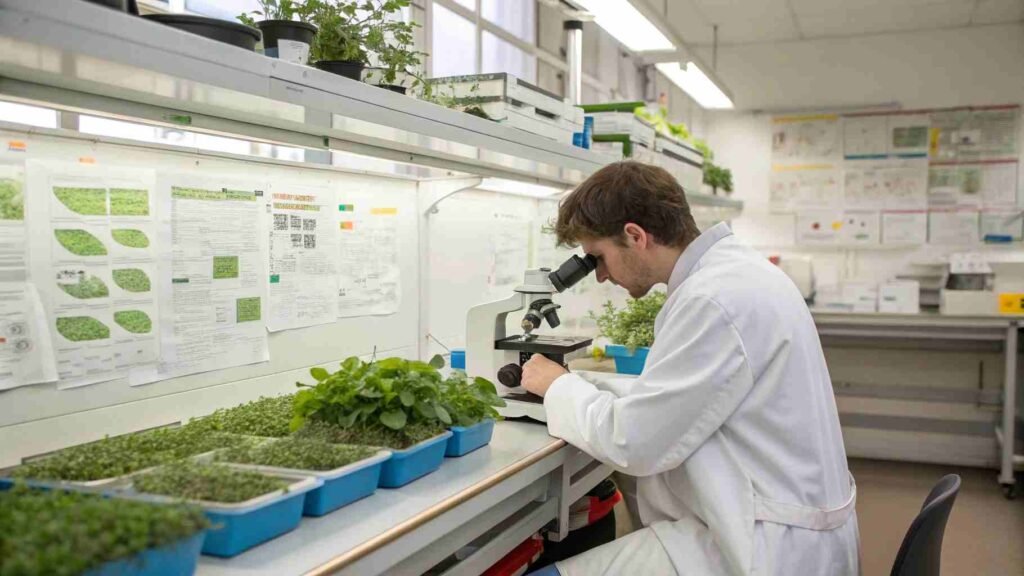
At the University of Cambridge’s Department of Plant Sciences, Dr. Eleanor Marsh (a pseudonym for this fictional example) leads a dedicated research team focusing on arugula’s biology, biochemistry and sustainability.
Her goals include:
- Understanding arugula’s unique compounds and how they support human health.
- Improving growing techniques to increase nutritional content and reduce environmental impact.
- Identifying arugula varieties that resist climate stress, like drought and frost.
Dr. Marsh collaborates with nutritionists, geneticists, and agronomists across Europe and works with local farmers to test her findings in real-world settings.
Key Breakthroughs in Arugula Research at Cambridge
Here are some of the most exciting findings from the arugula research labs:
Increased Glucosinolate Levels
Cambridge researchers have identified specific arugula strains that produce 30% more glucosinolates than average. These compounds are known to help prevent cancer by detoxifying carcinogens in the body.
Flavor Enhancement Through Soil Chemistry
Through advanced soil testing, researchers found that arugula grown in calcium-rich soil had a stronger, more peppery flavor without compromising its nutritional value.
Cold-Resistant Arugula Varieties
In response to climate change, the team is developing arugula plants that can withstand frost and cooler climates, allowing farmers in northern regions to grow year-round.
Impact on Gut Health
One recent study linked arugula consumption to improved gut microbiome diversity, which is crucial for digestion, mental health, and immunity.
Collaboration with Farmers and Food Brands
Dr. Marsh and her team are also working directly with:
- Local organic farmers to test new arugula strains in real-life conditions
- Grocery chains to educate consumers about the benefits of choosing nutrient-dense greens
- Health food companies to develop arugula-based supplements and products
This multi-level approach ensures that scientific discoveries don’t just stay in the lab—they reach your plate.
How to Add Arugula to Your Diet Today?
Want to support science and your health? Here are some easy ideas:
- Add a handful of arugula to your morning smoothie
- Make a peppery arugula pesto for pasta or pizza
- Toss fresh arugula into omelets or wraps
- Sprinkle chopped arugula on soups for a nutrient boost
The best part? You do not need to cook it to enjoy its benefits.
Future Directions at Cambridge
- Genome-assisted breeding programs targeting EC-efficient, high-glucosinolate, and pigment-rich cultivars.
- Optimized hydroponic systems combining EC, media blends, and microbial inoculants for small and urban farms.
- Postharvest retention strategies, using genetic line selection and storage condition control.
- Functional food development, e.g., microgreens, powders, extracts rich in anthocyanins and isothiocyanates.
- Regenerative soil models, integrating safe biosolids or compost amendments to boost nutritional profiles sustainably.
FAQ’s
1. Who discovered arugula?
Arugula has been used since ancient times by the Romans and Greeks. There’s no single person who discovered it—it’s a plant that people have eaten for thousands of years.
2. Why do British people call an arugula rocket?
In the UK, arugula is called “rocket” because the name comes from the Italian word ruchetta, which became roquette in French and then “rocket” in British English.
3. What is so special about arugula?
Arugula is special because it’s full of vitamins, minerals, and antioxidants. It has a peppery taste and may help fight inflammation and support heart health.
4. What is the scientific name of arugula?
The scientific name of arugula is Eruca sativa.
5. What is Taramira in English?
Taramira is called arugula or wild rocket in English. It’s a leafy green used in salads and also for making oil.
6. Can humans eat arugula?
Yes, humans can eat arugula! It’s safe, healthy, and great in salads, sandwiches, and even cooked dishes.
Conclusion:
Arugula is more than just a leafy green. It is packed with nutrients, helps your health and is being studied by top researchers at Cambridge. With its strong flavor and many benefits, arugula is truly special. Stay tuned with us as we explore more about this amazing super green.
Also Read:
- Cherry Magazine Cover – Complete Guide!
- Buttercup Magazine – A Creative Hub for Modern Thinkers!
- Princess Diana Magazines Value – Complete Guide!